Current as of June 2026. These laws are moving month to month, and several are still in court — there’s a fuller note at the end.
A mom in my daughter’s class texted me last month. She had tried to let her fourteen-year-old download a homework app, and the phone stopped them both: verify your age, then get a parent to approve it. She wanted to know if she’d done something wrong. She hadn’t. The app-store rules for teens changed, and she was one of the first parents I know to feel it.
If you’ve hit one of these prompts, here is what’s happening, in plain terms. A wave of new state laws now asks the app stores to check how old a user is, and to get a parent’s consent before a minor downloads an app or buys anything inside one. They’re usually called app store accountability acts. The first of them is already live, and more arrive over the rest of this year.
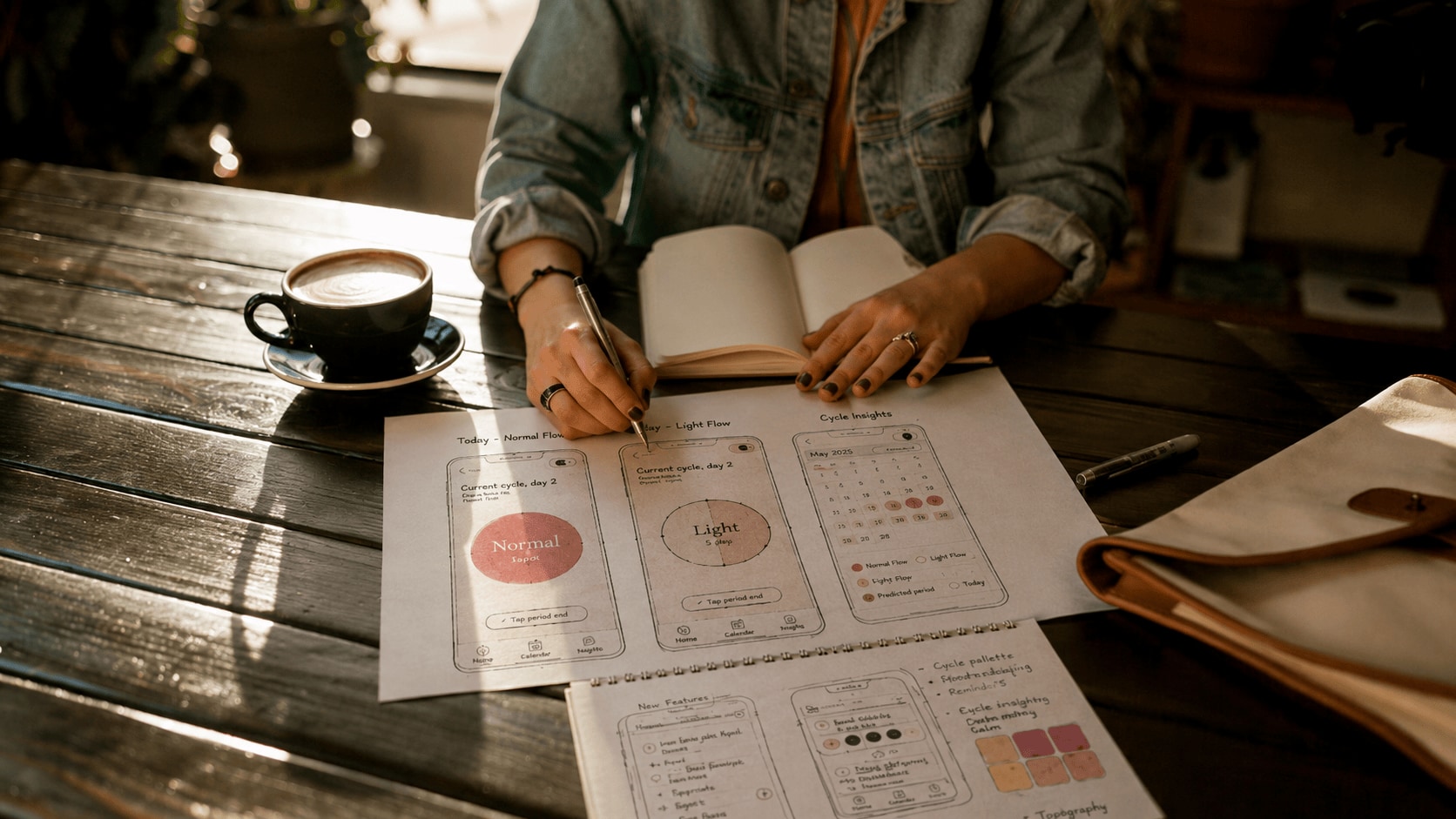
I run a small company that makes a period tracker for teenagers, so I’ve been reading these laws closely. I want to walk you through what they do, what they quietly leave alone, and the one question I’d actually ask before putting any period app on your daughter’s phone.
If you’d rather skip ahead: TeenCycle is on iOS and Android, free for 30 days. More on where it fits at the end.
What the new app-store rules actually do.
The short version: the new laws move age-checking and parental consent to the store itself, the App Store and Google Play, instead of leaving it to each app to handle on its own.
In practice, you’ll see it at setup. When an account is created, the store asks for an age. If the user is under eighteen, a parent has to approve downloads and in-app purchases, and the store passes an age range along to whoever made the app. It’s broader than the older federal rule most of us half-remember, the one that only covered children under thirteen. These cover every minor up to eighteen.
Texas was first. Its law was set to start on January 1, 2026. A federal judge paused it in December over free-speech concerns, the state appealed, and on May 28, 2026 an appeals court let it take effect while the case continues. So in Texas the rules are operative right now, even though the legal fight isn’t finished and could still go the other way.
Other states are close behind, though several have already pushed their dates back. Utah’s version is enacted, but a 2026 amendment moved its compliance deadline to May 2027 and narrowed enforcement to a parent lawsuit rather than the state attorney general. Louisiana was set for July 1, 2026, then delayed its law by a year to July 2027. Alabama’s takes effect January 1, 2027, with a longer runway for accounts that already exist, which have until October 2027 to be verified. California took a different road altogether: rather than a consent prompt at the store, its law builds an age signal into the device itself, and it comes online in 2027. There’s a federal bill in Congress carrying the same name, though it hasn’t passed.
I’m not going to tell you whether all of this is good policy. People I respect land in different places, and the courts haven’t settled it. What I can tell you is what these laws change, and what they leave untouched.
What they don’t do.
Here’s the part that surprised the mom who texted me, and the part that matters most if you’re choosing a health app for your daughter.
These laws are about the front door. They decide who can download an app and who has to say yes first. Apart from a narrow rule about the verification data itself, they say little about what an app does with your information once it’s installed: what it collects for its own purposes, where that data travels, who it’s shared with, whether it’s sold.
That’s a real gap, because the front door isn’t where the risk usually lives for a period app. The risk lives in the data. An app can pass every age check and still ask your daughter, on the first screen, how often she has sex. It can still send everything she logs to its own servers, keep it there, and pass it to advertisers. The consent prompt at download doesn’t reach any of that.
So a parent could approve an app, in good faith, under a brand-new law written to protect kids, and still end up in the exact situation the law was meant to prevent: a stranger holding her most private information. The approval was real. It just guarded the wrong thing.
The one question I’d ask.
When my daughter asked for a period tracker a couple of years ago, this is the question my husband and I kept circling back to. Not “is it approved,” not “is it popular.” Just: where does the data go.
Most apps answer that with a privacy policy, a long document that promises to handle your data carefully. A promise is only as strong as the company keeping it, and companies change hands, get breached, and get subpoenaed. The policy you read today can be rewritten after an acquisition you never hear about.
There’s a different kind of answer, and it’s the one I’d look for. Some apps are built so the data simply never leaves the phone. No account, no cloud, nothing sitting on a server to share or sell or hand over, because there’s no server holding it in the first place. With an app like that you’re not trusting a policy. You’re trusting how the thing is built.
If you want a longer walk through how to read a privacy policy and what “private” really means, I wrote about both in privacy-first period apps in 2026 and what “offline” actually means.
Where TeenCycle fits.
I’ll be straight about my own bias here, since I make one of these apps.
We built TeenCycle to sit on the safe side of that gap. There’s no account and no email to sign up. Nothing your daughter logs leaves her phone. We don’t run analytics, we carry no third-party trackers, and we don’t keep a server with her cycle on it. So when the store passes us that new age signal, there’s nothing on our end for it to attach to. We couldn’t sell her data if we wanted to, because we never receive it.
That choice cost us a few things, and I’d rather you hear them from me. We can’t offer cloud backup across devices the way a connected app can, and if she switches phones she has to export her data herself. We decided the trade was worth it. The entire point was an app that holds nothing.
It’s also why we don’t ask the questions that started all of this for our family in the first place. No questions about sex, no profile, no feed, nobody who can reach her through it. If you want the fuller story on that, it’s in is Flo safe for my teenage daughter.
TeenCycle is free for 30 days, then a one-time $9.99 to unlock it for good. Not a subscription, and no second charge ever. Whatever she logs stays on her phone whether or not you decide to buy.
What to do this week.
You don’t need to overhaul anything. If your daughter already uses a period app, open it and check one thing: does it have an account and a cloud, or does the data stay on the device. If you genuinely can’t tell from the app or its policy, treat that as an answer too.
And if you’d like one calm note a month, no tracking and no pixels, just a short piece like this one, you can get the journal in your inbox with the single-field sign-up below. One click to leave, any time.
The new rules are a real step, and I’m glad parents are being asked first. They guard the doorway. What you keep inside the house is still up to you.
A note on accuracy: I’m a parent, not a lawyer, and these laws are moving month to month, with several still in court. The dates above are current as of mid-June 2026. For anything that affects a decision you’re actually making, check the current status or ask someone who follows this for a living. TeenCycle is a tracker, not a medical device, and isn’t a substitute for talking to a healthcare provider.
References & sources.
- Comparing enacted app store accountability acts — Future of Privacy Forum
- Texas app store law takes effect after Fifth Circuit stays preliminary injunction — Morrison Foerster
- Louisiana and Utah delay app store accountability effective dates — Alston & Bird
- Alabama enacts App Store Accountability Act (effective Jan 1, 2027) — Hunton Andrews Kurth
- AB-1043, California Digital Age Assurance Act — bill text
- App Store Accountability Act, H.R.3149 (119th Congress) — Congress.gov